
CR102P Industrial Conductivity and TDS Sensor China Factory Suppliers

Buy high-precision CR-102P conductivity and TDS sensors from leading China factory suppliers. Featuring NTC 10K thermistor for stability and ABS engineering plastic for strong anti-acid and anti-alkaline performance.

Product Details

Product Details

Contact Now

Contact Now

Product Details

The CR-102P is a professional-grade industrial conductivity and TDS sensor designed for high-precision water quality monitoring. Engineered for versatility, this sensor provides reliable real-time measurements across various ranges, ensuring optimal control for pure water, tap water, and wastewater treatment processes.

Constructed with high-grade ABS engineering plastic and platinum elements, the CR-102P offers exceptional resistance to acids and alkalis. With integrated temperature compensation and a robust bipolar electrode structure, it delivers stable performance and rapid response times, making it an ideal choice for rigorous industrial environments.

Detailed Parameters

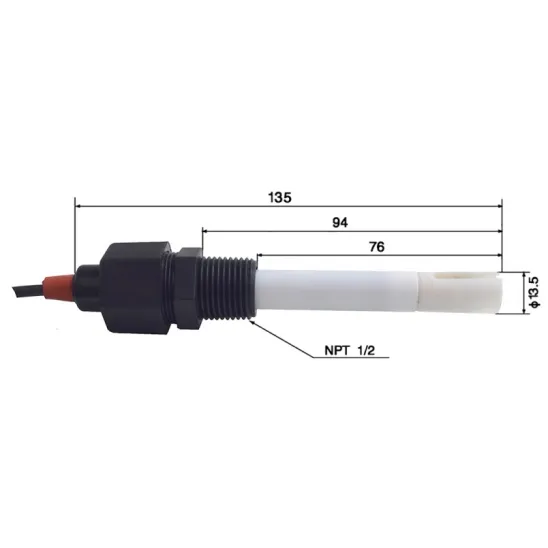
Measuring Range0-200uS, 0-2000us, 0-4000uS, 0-10mS, 0-9999ppmBody MaterialABS + Pt. black
Cell Constant1.0cm-1Electrode StructureBipolar
Temp. CompensationNTC 10K, PT1000RTDResponse Time5 seconds
Operating Temp.0-60℃Connection Port1/2" NPT thread
Pressure Range0-0.6mPaCable Length4.5m (Customizable)

Key Advantages


Chemical Resistance

Adopted ABS engineering plastic provides strong anti-acid and anti-alkaline characteristics for harsh environments.


Rapid Response

Achieves a fast response time of only 5 seconds, allowing for immediate detection of water quality shifts.


High Stability

Bipolar electrode design ensures stable and consistent conductivity measurements over long-term operation.


Precise Compensation

Integrated NTC 10K thermistor provides accurate temperature compensation to eliminate thermal drift.


Versatile Mounting

Flexible installation options including piping mounts or submersible deployment for various site needs.


Easy Integration

Available with Pin or BNC connectors for seamless connection to transmitters and controllers.

Product Gallery

Management Platforms

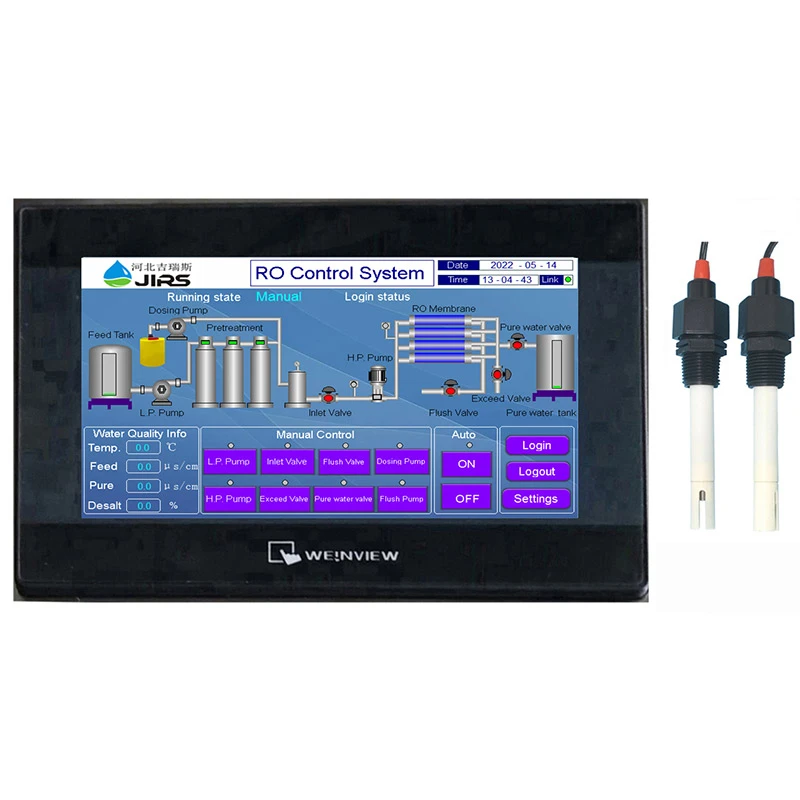
Online Monitoring

Real-time tracking of TDS and Conductivity levels across your water treatment line.

System Calibration

Easy parameter adjustment and zero-point calibration for maximum accuracy.

Threshold Alerts

Instant notifications when water quality exceeds pre-set industrial safety limits.

Data Logging

Historical data storage for compliance reporting and water quality trend analysis.

Multi-point Control

Centralized management of multiple CR-102P sensors across different plant zones.

Remote Diagnostics

Check sensor health and signal integrity remotely to reduce on-site maintenance.

Investment Return Comparison

MetricStandard SensorsCR-102P Sensor
Material LifeShort (Corrodes fast)Extended (ABS Engineering)
Response Speed10-20 Seconds5 Seconds
Maintenance FrequencyHigh (Monthly)Low (Quarterly)
Temp. AccuracyBasic/ManualIntegrated NTC/PT1000
Total Cost of OwnershipHigher due to replacementsLower due to durability

Frequently Asked Questions

Q: What is the main application of the CR-102P sensor?

The CR-102P is widely used for online measurement of TDS and conductivity in pure water, tap water, cooling water, and sewage water treatment industries.

Q: Can this sensor be used in acidic or alkaline environments?

Yes, the sensor body is made of ABS engineering plastic, which provides strong anti-acid and anti-alkaline characteristics for better durability.

Q: How does the temperature compensation work in the CR-102P?

It utilizes an integrated NTC 10K thermistor or PT1000RTD to monitor water temperature and automatically compensate the conductivity reading for accuracy.

Q: What are the available connection methods for the cable?

The CR-102P supports multiple cable joining methods, including Pin connectors or BNC connectors, depending on your transmitter requirements.

Q: Is the installation process complex for piping systems?

No, it features a standard 1/2" NPT thread for easy piping installation, and it can also be used as a submersible probe.

Q: What is the maximum pressure this sensor can withstand?

The CR-102P is designed to operate within a pressure range of 0 to 0.6mPa.

Ready to Optimize Your Water Quality Monitoring?

Contact Us

Get in Touch

If you are interested in our products, you can choose to leave your information here, and we will be in touch with you shortly.

* Name

* E-mail

Phone

*Message

FAQS


Related Products

right
right
RO Membrane

RO Membrane

PH-6800

PH-6800

WS-9200/9250

WS-9200/9250

RO-8100

RO-8100

RO- 8200

RO- 8200

ORP-6800

ORP-6800

PH/ORP-600

PH/ORP-600

JIRS-803C

JIRS-803C

Related News

right
right
Rotameter FAQ for small-flow measurement in water treatment

Nov.03,2026

Rotameter FAQ for small-flow measurement in water treatment

Learn how a Rotameter measures fluid flow, where it fits in water-treatment and RO systems, and which accuracy, pressure, and float details to review before ordering.

Choosing WS 9100: Application Fit and Specification Checks

Oct.29,2026

Choosing WS 9100: Application Fit and Specification Checks

Evaluate whether the WS 9100 fits your environmental monitoring project. Review power supply options, temperature-controlled storage, sampling method compatibility, and key specifications before purchasing.

PH/ORP-6850 Controller FAQ: Specifications, Configuration Options and Ordering Questions

Oct.23,2026

PH/ORP-6850 Controller FAQ: Specifications, Configuration Options and Ordering Questions

PH/ORP-6850 FAQ: pH 0–14 and ORP ±1200 mV ranges, ±0.02 pH accuracy, isolated 4–20 mA output, relay alarms, power supply options and panel installation.

Guide to Ensuring Water Purity for drinking water tds Monitoring

Jul.01,2026

Guide to Ensuring Water Purity for drinking water tds Monitoring

Ensuring Water Purity: The Ultimate Guide for Drinking Water TDS Monitoring Maintaining high water quality standards is essential for public health and industrial safety. One of the most critical metrics for assessing water purity is Total Dissolved Solids TDS, which represents the combined content of all inorganic and organic substances dissolved in water. Utilizing high-precision equipment for drinking water tds measurement allows facilities to detect contamination and ensure that filtration systems are operating at peak efficiency. In this guide, we will explore the technical aspects of TDS monitoring and how advanced transmitters provide the reliability needed for modern environmental monitoring.

Understanding the Conversion of Electrical Conductivity to TDS

Jun.29,2026

Understanding the Conversion of Electrical Conductivity to TDS

Understanding the Conversion of Electrical Conductivity to TDS In water quality analysis, measuring the purity of a liquid often involves understanding the relationship between electrical conductivity to tds Total Dissolved Solids. While conductivity measures the ability of water to pass an electrical currentwhich is directly influenced by the concentration of ionized substancesTDS represents the total amount of mobile charged ions, including minerals, salts, or metals dissolved in a given volume of water. For professionals in environmental monitoring and water treatment, mastering this conversion is essential for maintaining system efficiency and ensuring regulatory compliance.

Industrial Guide to Electrical Conductivity Salt Water Monitoring

Jun.27,2026

Industrial Guide to Electrical Conductivity Salt Water Monitoring

Understanding Electrical Conductivity Salt Water Monitoring for Industrial Precision In the realm of water quality analysis, measuring the electrical conductivity salt water levels is a critical process for maintaining industrial efficiency and environmental safety. Conductivity serves as a direct indicator of the concentration of dissolved ions, which is essential for industries ranging from desalination plants to chemical manufacturing. Accurate monitoring prevents equipment corrosion, ensures product purity, and supports regulatory compliance. By utilizing advanced instrumentation, operators can achieve real-time insights into salt concentrations, allowing for immediate adjustments in water treatment processes to avoid costly downtime.

Technical Guide to Industrial ec meter circuit Design and Use

Jun.26,2026

Technical Guide to Industrial ec meter circuit Design and Use

Understanding the EC Meter Circuit: The Heart of Water Quality Analysis Electrical Conductivity EC is a fundamental parameter in environmental monitoring, aquaculture, and industrial water treatment. At the core of every reliable measurement device is a sophisticated ec meter circuit , which converts the physical conductance of a liquid into a precise digital reading. Whether you are managing a boilers deoxygenation process or monitoring nutrient levels in hydroponics, understanding how the circuit handles signal amplification and temperature compensation is key to ensuring data accuracy. This guide explores the technical intricacies of EC circuitry and how it integrates into professional water quality controllers.

Professional Guide to drinking water testing for tds and Purity

Jun.25,2026

Professional Guide to drinking water testing for tds and Purity

Drinking Water Testing for TDS: Ensuring Pure and Safe Water Quality Maintaining high water quality is essential for both health and industrial efficiency. When performing drinking water testing for tds , professionals seek to measure the Total Dissolved Solids TDS, which indicates the concentration of dissolved inorganic salts and organic matter in water. Whether you are managing a municipal water plant or a high-precision industrial facility, understanding the conductivity and TDS levels is the first step toward effective water treatment. In this guide, we explore the technical aspects of TDS measurement and the advanced instrumentation required for accurate monitoring.

If you are interested in our products, you can choose to leave your information here, and we will be in touch with you shortly.


en_USEnglish