Understanding distilled water conductivity is fundamental for any laboratory or industrial process that relies on high-purity water. Conductivity serves as the primary indicator of ionic contamination, allowing technicians to verify that the distillation process has effectively removed dissolved solids, minerals, and impurities that could otherwise compromise sensitive chemical reactions or biological assays.
Across global industries, from pharmaceutical compounding to semiconductor fabrication, maintaining a low and stable distilled water conductivity level is not just a quality preference but a strict regulatory requirement. When conductivity rises, it signals a breakthrough of contaminants, potentially leading to equipment corrosion, inaccurate analytical results, or the failure of critical batch productions.
By leveraging precision instrumentation such as conductivity meters and RO system controllers, organizations can ensure the longevity of their infrastructure and the integrity of their products. Mastering the nuances of water purity monitoring allows for a transition from reactive troubleshooting to proactive quality assurance, ensuring that every drop of distilled water meets the most rigorous international standards.
The Fundamental Science of Distilled Water Conductivity
At its core, distilled water conductivity is a measure of the water's ability to pass electrical current, which is directly proportional to the concentration of dissolved ionized substances. In a theoretical state of absolute purity, water is a poor conductor; however, the presence of even trace amounts of minerals like calcium, magnesium, or sodium introduces ions that facilitate electron flow, thereby increasing the conductivity reading.
The process of distillation removes these ions by boiling water into vapor and condensing it back into liquid, leaving non-volatile contaminants behind. Monitoring the resulting conductivity is the most efficient way to validate that the distillation apparatus is functioning correctly and that the water produced is truly "pure" for the intended commercial or scientific application.
Global Industry Standards and Regulatory Compliance
Globally, the benchmarks for distilled water conductivity are governed by strict guidelines from organizations such as the ISO and the USP (United States Pharmacopeia). In the pharmaceutical sector, for instance, "Water for Injection" (WFI) must adhere to incredibly low conductivity limits to ensure patient safety and prevent pyrogenic reactions, making high-precision transmitters and controllers indispensable.
The challenge often lies in the discrepancy between different purity grades. While Type III water may be acceptable for simple glassware rinsing, Type I ultrapure water requires near-zero conductivity. This stratification creates a complex environment where facilities must employ multiple sensors and RS485 transmitters to monitor different stages of the water treatment chain in real-time.
Failure to comply with these global standards can lead to severe consequences, ranging from regulatory fines and product recalls to the complete failure of medical devices. Consequently, the integration of automated conductivity controllers has become a standard operational procedure to eliminate human error in manual sampling and recording.
Key Factors Affecting Purity Measurement
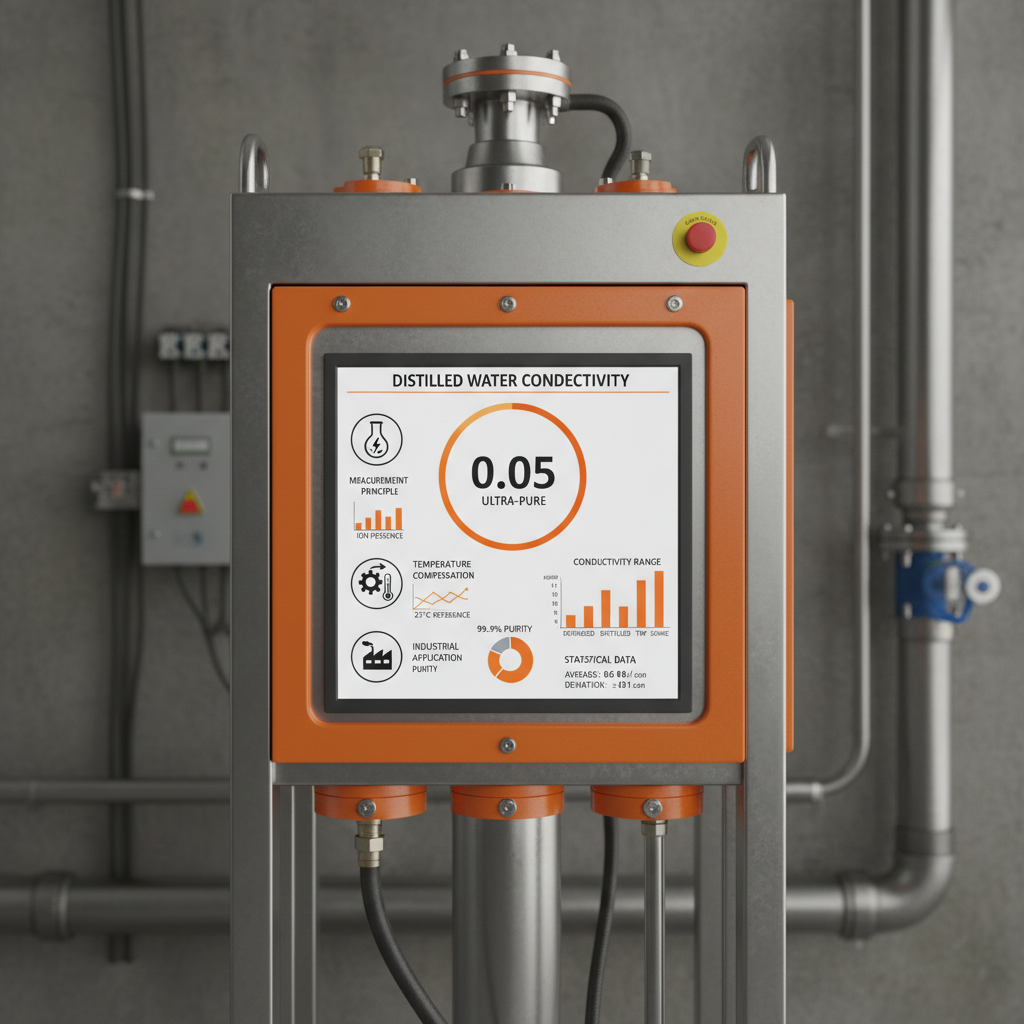
Temperature is perhaps the most critical variable influencing distilled water conductivity. As water temperature increases, the viscosity decreases and ionic mobility increases, which naturally leads to a higher conductivity reading even if the purity remains constant. This is why professional-grade meters utilize Automatic Temperature Compensation (ATC) to normalize readings to 25°C.
Atmospheric CO2 absorption is another stealthy factor that can skew results. When distilled water is exposed to air, carbon dioxide dissolves to form carbonic acid, which dissociates into ions. This phenomenon can cause the distilled water conductivity to rise rapidly shortly after the water leaves the still, often leading technicians to believe their system is failing when it is simply a matter of air exposure.
Finally, the material of the storage vessel and the quality of the sensor probe play vital roles. Leaching from low-grade plastics or contaminated electrodes can introduce ions into the sample, resulting in "false positives" for impurity. Utilizing high-grade stainless steel or PTFE-coated sensors is essential for maintaining the accuracy of low-range conductivity measurements.
Comparative Analysis of Measurement Methods
Selecting the right method to monitor distilled water conductivity depends on the required precision and the operational environment. Contact-based conductivity sensors are the industry workhorse, offering reliability and ease of integration with 4-20mA transmitters for remote monitoring in industrial water plants.
However, for ultrapure applications where any contact might introduce contamination, non-contact inductive sensors are preferred. While more expensive, they eliminate electrode polarization and fouling, ensuring that the measured distilled water conductivity reflects the actual state of the water without interference from the sensor itself.
Efficiency Comparison of Distilled Water Conductivity Monitoring Methods
Real-World Applications in High-Precision Sectors
In the pharmaceutical industry, the control of distilled water conductivity is a non-negotiable aspect of Good Manufacturing Practices (GMP). Water used in the production of intravenous fluids must be free of ionic impurities to ensure osmotic balance and prevent adverse reactions in patients, necessitating the use of continuous-loop monitoring systems.
Similarly, in the power generation sector, high-pressure boilers require distilled water with extremely low conductivity to prevent scale buildup and "pitting" corrosion. A slight increase in distilled water conductivity in a boiler feed system can lead to millions of dollars in equipment damage and unplanned outages, highlighting the critical nature of real-time conductivity transmitters.
Long-Term Value of Rigorous Conductivity Monitoring
The long-term value of investing in precise distilled water conductivity monitoring extends far beyond mere compliance. By identifying trends in conductivity rise, facility managers can predict the exhaustion of ion-exchange resins or the failure of distillation seals before they cause a system shutdown, effectively shifting from corrective to predictive maintenance.
Furthermore, the reduction of chemical waste and energy consumption is a tangible benefit. When the conductivity is monitored accurately, operators avoid over-processing water or unnecessary regeneration of filters, which reduces the overall environmental footprint of the facility and lowers operational costs.
From a strategic perspective, the trust gained from stakeholders and auditors by providing transparent, digitally logged conductivity data is invaluable. In an era of heightened transparency, having an immutable record of water purity proves a commitment to quality and safety that enhances a brand's reputation in the global marketplace.
Future Innovations in Water Purity Automation
The future of distilled water conductivity management lies in the integration of the Internet of Things (IoT) and Artificial Intelligence (AI). We are seeing a shift toward "smart sensors" that not only measure conductivity but also perform self-diagnostics and automatic calibration, reducing the need for manual intervention in hazardous industrial zones.
Digital transformation is also enabling the creation of "Digital Twins" for water treatment plants. By simulating how changes in feed water quality affect the final distilled water conductivity, engineers can optimize the distillation process in real-time, ensuring maximum efficiency with minimum energy expenditure.
Sustainability is also driving the development of green energy-powered distillation units paired with ultra-low-power conductivity transmitters. These innovations ensure that even remote research stations or disaster-relief water systems can maintain pharmaceutical-grade water purity without relying on a stable power grid.
Analytical Comparison of Water Purity Technologies for Conductivity Control
| Technology Type |
Conductivity Precision |
Maintenance Effort |
Ideal Application |
| Single-Stage Distiller |
Moderate (2-5 µS/cm) |
Medium |
General Lab Use |
| Double-Stage Distiller |
High (0.1-1 µS/cm) |
High |
Analytical Chemistry |
| RO + EDI System |
Ultra-High (<0.1 µS/cm) |
Low (Automated) |
Semiconductor Fab |
| Ion Exchange Resin |
High (Variable) |
Very High |
Specialized Buffers |
| Vapor Compression |
Moderate to High |
Medium |
Large Scale Industrial |
| Vacuum Distillation |
High |
Medium |
Heat-Sensitive Liquids |
FAQS
The "ideal" conductivity depends on the application. For general laboratory distilled water, a reading below 2.0 µS/cm is typically acceptable. However, for high-purity or "ultrapure" requirements, the distilled water conductivity should be significantly lower, often approaching 0.055 µS/cm. Always refer to your specific industry standards (like USP or ISO) to determine the exact threshold for your process.
This is usually caused by the absorption of carbon dioxide (CO2) from the air. When CO2 dissolves in water, it forms carbonic acid, which dissociates into ions, thereby increasing the conductivity. To prevent this, store distilled water in airtight, high-density polyethylene (HDPE) or glass containers and minimize exposure to the atmosphere.
While TDS (Total Dissolved Solids) meters are related to conductivity, they are generally not precise enough for distilled water. TDS meters apply a conversion factor to conductivity readings, which is based on typical salt concentrations. Since distilled water has almost no dissolved salts, this conversion is inaccurate. A dedicated conductivity meter with a low-range sensor is required for accurate purity verification.
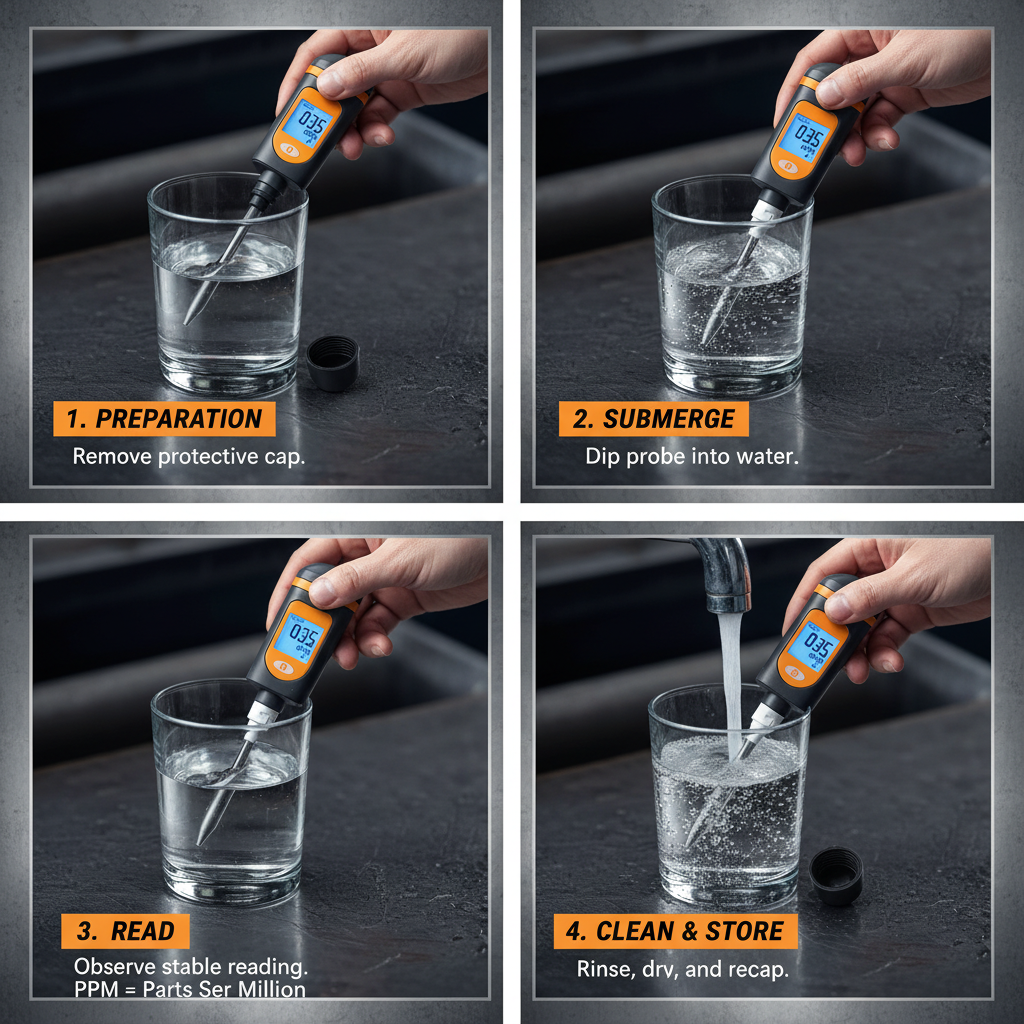
For critical industrial processes, monthly calibration is recommended. However, if you notice a drift in readings or are operating in a high-fouling environment, weekly checks are advisable. Using a certified standard solution that matches the expected range of your distilled water ensures the highest level of accuracy and regulatory compliance.
Resistivity is simply the mathematical reciprocal of conductivity (Resistivity = 1 / Conductivity). In the context of ultra-pure water, resistivity is often used because it is easier to express very low conductivity as a high resistivity value (e.g., 18.2 MΩ·cm). Both measure the same physical property: the water's ability to conduct an electric current.
For low distilled water conductivity, platinum or high-grade stainless steel electrodes are preferred. For the most sensitive applications, non-contact inductive sensors are the gold standard as they avoid electrode polarization and contamination, providing the most stable and accurate readings for high-purity water streams.
Conclusion
Maintaining a precise understanding and control of distilled water conductivity is the cornerstone of quality assurance in modern industrial and scientific water treatment. From the fundamental physics of ionic mobility to the implementation of AI-driven monitoring systems, the ability to detect trace contaminants ensures the safety of pharmaceuticals, the efficiency of power plants, and the precision of laboratory research.
As we move toward a future of increased automation and sustainability, the role of high-accuracy conductivity transmitters and controllers will only grow. We recommend that organizations audit their current monitoring hardware to ensure it meets the latest ISO standards and transition toward integrated, real-time sensing solutions to minimize risk and maximize operational longevity. For professional water quality solutions, visit our website: www.watequipments.com