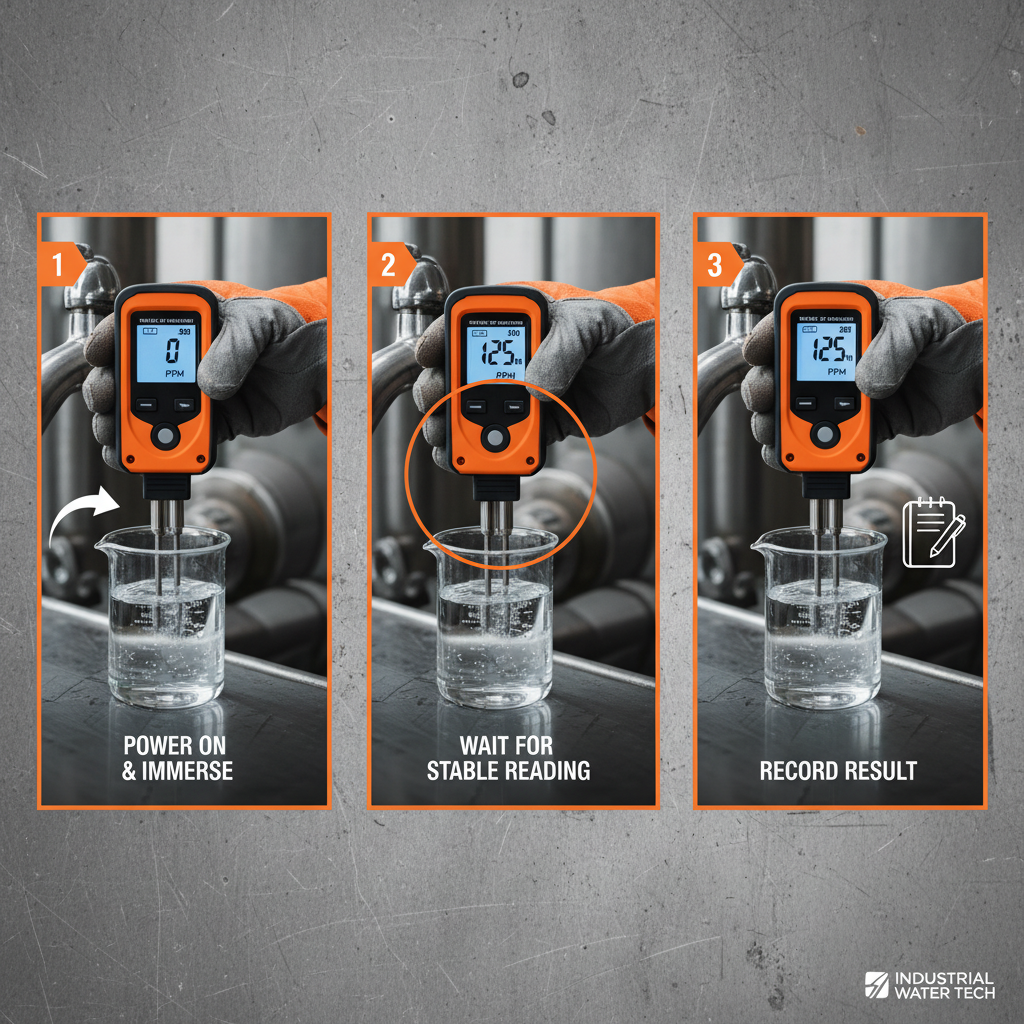


Maintaining accurate oxygen levels is critical in water quality management, yet the cost of high-end sensors often deters small-scale operations. Finding a cheap dissolved oxygen meter that balances affordability with reliable performance is a primary challenge for environmental technicians and aquaculture managers who need precise data without exceeding tight budgets.
The core problem lies in the trade-off between initial procurement costs and long-term operational accuracy. Users often struggle to identify whether a lower-priced device is a viable professional tool or an unreliable consumer-grade gadget that will fail under industrial conditions or require excessive calibration.
This analysis provides a professional framework for evaluating budget-friendly dissolved oxygen solutions. We examine the technical trade-offs of affordable meters, how to match specific sensor types to your application, and a decision matrix to ensure your investment provides a genuine return on accuracy.

Understanding the Cost-Performance Ratio

When searching for a cheap dissolved oxygen meter, the primary objective is not to find the lowest price, but the lowest "cost per reliable data point." In the field of water pollution prevention and monitoring, a device that is inexpensive to buy but drifts significantly between calibrations creates a hidden cost in labor and potential regulatory non-compliance.
Professional-grade budget options typically achieve affordability by simplifying the user interface or focusing on a single-channel measurement rather than offering complex data logging and multi-parameter integration. For many industrial applications, such as municipal wastewater treatment, these streamlined devices are sufficient provided the core sensor chemistry remains stable.
Sensor Technology: Galvanic vs. Polarographic
The price of a dissolved oxygen meter is heavily influenced by the sensor type. Galvanic sensors are often found in budget-friendly models because they are easier to maintain and ready for use immediately after calibration. They produce their own small current, eliminating the need for a long "warm-up" period, which makes them ideal for quick spot checks in environmental monitoring.
Polarographic sensors, while sometimes cheaper in raw component cost, require an external voltage (polarization) and a waiting period before they can provide accurate readings. For a user seeking a cheap dissolved oxygen meter, the galvanic option usually offers a better practical experience, despite slightly higher membrane replacement costs over time.
Critical Application Scenarios for Budget Meters
Budget-friendly meters are highly effective in scenarios where high-frequency trending is more important than laboratory-grade absolute precision. For instance, in aquaculture, monitoring the dip in oxygen levels during the pre-dawn hours is critical for fish survival; a budget meter that tracks these trends accurately is far more valuable than no monitoring at all.
Similarly, in basic industrial effluent monitoring, these tools serve as an excellent "first line of defense." They can trigger an alert if oxygen levels drop unexpectedly, prompting the technician to deploy a higher-precision instrument or adjust the aeration system. Hebei JIRS provides a wide range of sensors and controllers that fit these specific operational needs, focusing on durability and essential accuracy.
Analyzing Relative Value Drivers
Evaluating the value of a budget meter requires looking at normalized scores across different performance dimensions. While a cheap dissolved oxygen meter may score lower on "long-term stability" compared to a high-end optical sensor, it often scores exceptionally high on "deployment speed" and "initial ROI" for small-scale projects.
The illustrative framework above compares typical budget meters against premium industrial systems. The data suggests that for basic monitoring, the gap in operational utility is much smaller than the gap in price, making budget units a logical choice for specific environmental production tasks.
Key Procurement Criteria for Affordable Units
To avoid purchasing "disposable" equipment, buyers should prioritize three technical aspects: temperature compensation, calibration ease, and probe durability. Because dissolved oxygen levels are highly dependent on temperature, a meter without automatic temperature compensation (ATC) is practically useless in outdoor environmental monitoring.
Additionally, verify the availability of replacement membranes and electrolyte solutions. A cheap meter becomes expensive if the probe cannot be serviced and must be replaced entirely every six months. Look for suppliers who offer a clear path for OEM/ODM customization to ensure the probe housing is compatible with your specific piping or tank installation.
Common Risks in Low-Cost Equipment
The most significant risk when deploying a cheap dissolved oxygen meter is "sensor drift." Lower-quality membranes may allow contaminants to enter the electrolyte more quickly, leading to erratic readings. This is particularly dangerous in wastewater treatment, where a false high reading could lead to an aeration failure and subsequent environmental fines.
Another common pitfall is the lack of electromagnetic compatibility (EMC). In industrial environments filled with pumps and motors, budget meters without proper shielding can experience signal interference. Ensuring the device has basic ESD and over-voltage protection, as seen in professional controllers, is essential for long-term survival in a factory setting.
Selection Framework: Budget vs. Professional
Choosing between a budget-friendly unit and a high-end industrial system depends on the cost of an incorrect reading. If the measurement is for internal process optimization, a budget meter is often sufficient. If the measurement is for legal compliance or critical life-support systems, the investment in a premium system is mandatory.
| Feature | Budget Meter | Industrial System | Best Use Case |
|---|---|---|---|
| Sensor Type | Galvanic/Polaro | Optical/Luminescent | Spot vs Continuous |
| Calibration | Manual/Frequent | Automatic/Rare | Low vs High Volume |
| Drift Rate | Moderate | Very Low | Trend vs Absolute |
| Initial Cost | Low | High | Pilot vs Full Scale |
| Durability | Standard Plastic | Stainless/Teflon | Clean vs Harsh Water |
| Data Output | LCD Display | 4-20mA / Modbus | Manual vs Automated |
This comparison demonstrates that "cheap" does not mean "incapable." By matching the device capabilities to the actual requirement of the water monitoring site, organizations can optimize their procurement spending without sacrificing essential data integrity.
Frequently Asked Questions
Yes, for most aquaculture needs, budget meters are sufficient because the priority is monitoring trends and preventing lethal oxygen drops rather than achieving laboratory-grade precision.
Automatic Temperature Compensation (ATC) is critical. Since oxygen solubility changes with temperature, a meter without ATC will provide incorrect readings in varying environmental conditions.
Budget meters typically drift more than premium ones. It is recommended to calibrate them daily or before every major sampling session to ensure data reliability.
Generally, no. Compliance usually requires certified, high-stability instruments with documented calibration trails. Budget meters are better for internal process control.
Membrane rupture and electrolyte depletion are the most common issues. Regularly checking the membrane for bubbles or tears is essential for maintaining accuracy.
For most budget users, galvanic is better because it requires no warm-up time, making the device ready for immediate use upon power-up.
Conclusion
A cheap dissolved oxygen meter can be a powerful asset if chosen based on application requirements rather than price alone. By prioritizing automatic temperature compensation, understanding the difference between galvanic and polarographic sensors, and acknowledging the need for more frequent calibration, users can achieve reliable water quality monitoring on a restricted budget.
For organizations seeking a balance of professional capability and cost-efficiency, reviewing tailored sensor and controller options at www.watequipments.com can help identify the right tool for your specific environmental monitoring needs.