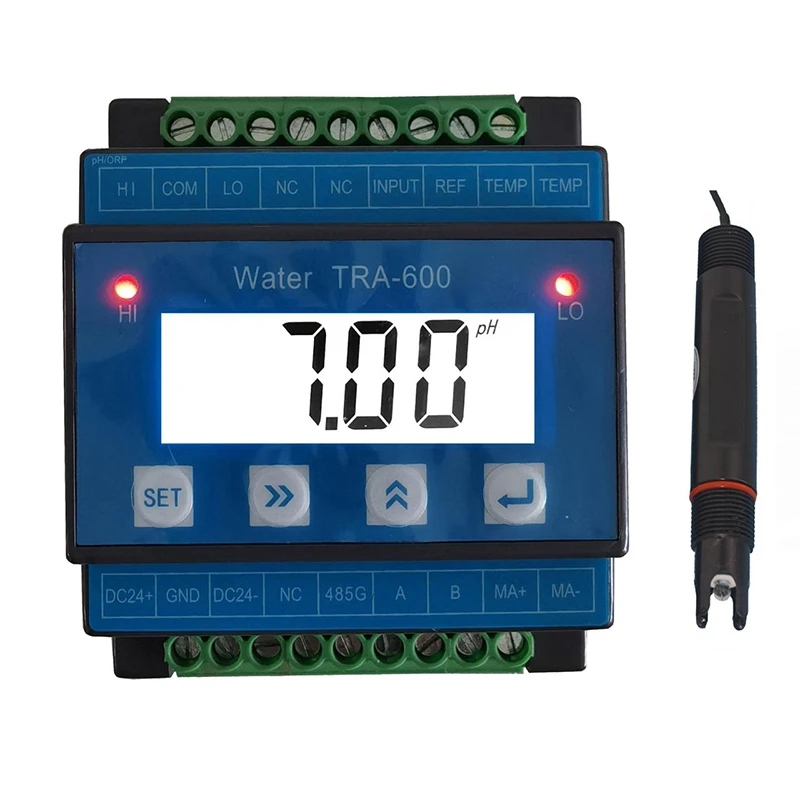
PH-TRA-600

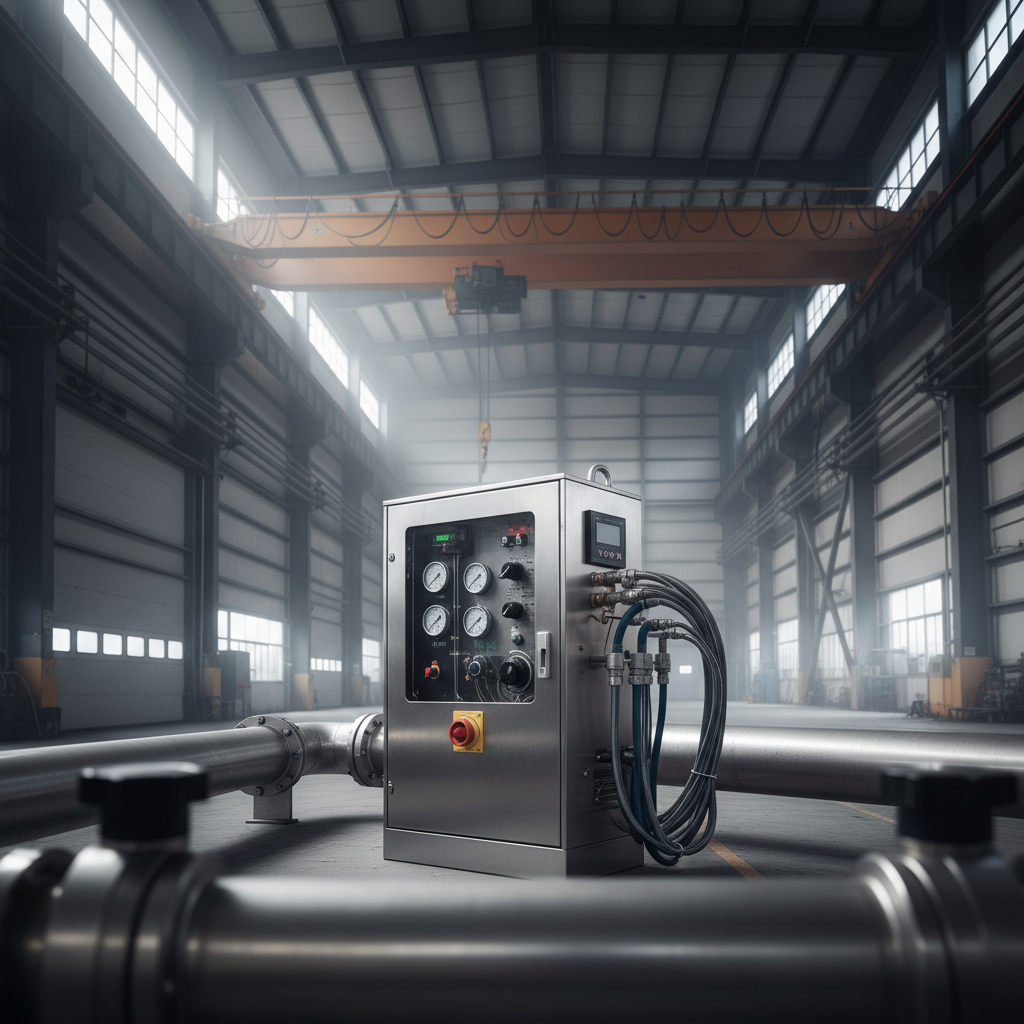
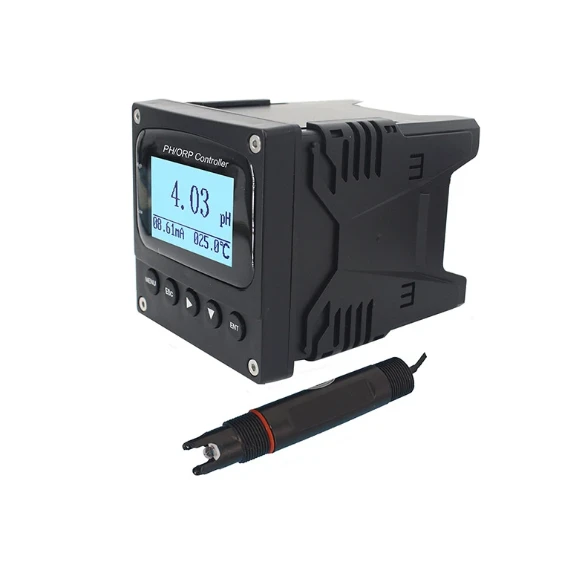
PH-TRA-600 online PH transmitter is an accurate instrument used for industrial on-line PH measurement and PH controlling. The instrument is easy to install and use, operates safely, has a strong adaptability to the environment, and requires little maintenance. It widely used for the water treatment environmental protection, industrial waste water, chemical industry etc. The instrument has the following main characteristics: 1) Switch display PH and Temp. value. 2) Three-point calibration, automatic identification of solutions. 2) High and Low limit relay control output, 3) Isolated 4-20mA current signal output or RS485 output.

Product Details

Product Details

Contact Now

Contact Now

Product Details


Major Technical Specifications

Measurement range0.000~14.00pH
Resolution ratio0.02PH
Accuracy±0.1pH
Displaying mode3½ LCD
Calibrating modeThree-point calibration (automatic identification of solutions)
Manual temperature compensation0~120℃
Compression resistance of electrodes0~0.5MPa
Measurement distancestandard configuration 5m(≤40m)
Flow Velocity≤3m/s
Pressure≤0.4Mpa
Output4-20mA current or Modbus RS485 (optional)
Control outputMaxi. and Mini. (constantly open) contact point
Capacity of contact points3A/AC250V (with resistant loads)
Power supplyDC-24V,0.5A □; (Standard) DC-12V,0.5A □; (Optional)
Environmental conditionsHumidity: ≤85%/RH; Temp.: 0~50℃
External dimensions92*76*59mm (H x W x D)
Installation modeDIN Installation

Wire Connection Details

PH-TRA-600

Note: The standard version is a two-wire manual temp. compensation electrode

A Terminals:

No.

Terminal

Terminal Content

1

HI

Constantly open high limit relay alarm output

2

COM

Relay common terminal

3

LO

Constantly open low limit relay alarm output

4

NC

Empty

5

NC

Empty

6

INPUT

PH electrode signal input( Transparent wire)

7

REF

PH electrode signal ground wire( Black)

8

TEMP

Auto Temp. compensation measuring wire

9

TEMP

Auto Temp. compensation measuring wire

B Terminals:

No.

Terminal

Terminal Content

1

DC 24+

Power input +

2

GND

Equipment Ground wire

3

DC 24-

Power input -

4

NC

Empty

5

485G

RS 485 Signal Ground wire

6

A

RS485 Signal A

7

B

RS485 Signal B

8

MA+

4-20mA current signal output +

9

MA-

4-20mA current signal output -

Operation Of The Instrument

4.1 Soft key function

Soft key

Key function

Function description

PH-TRA-600

Menu Key

Under Measuring status, Enter or exit related parameter “setting Menu”

PH-TRA-600

Right shift key

Right Shift to select the digit of the parameter(Number flashes When selected); Up shift to browse Menu.


PH-TRA-600

Add shift key

Change the selected parameter digital value and parameter shift

PH-TRA-600

Confirm key

Confirm to select and enter into Menu and parameter save, check the temperature value.

4.2. Operation of the instrument

Under main interface,Press“PH-TRA-600 ”key to Menu interface, the detailed description as follows:

No.

Menu

Menu Content

1

Un-T

Measuring Unit: pH/mV shift to display

2

T--C

Temp Compensate Interface: HT-- (Manual) 、PT--( PT1000)、  NTC-(NTC10K)

3

HC--

Relay high limit close value

4

HO--

Relay high limit open value

5

LC--

Relay low limit close value

6

LO--

Relay low limit open value

7

DE--

delay x second alarm

8

4--A

4mA corresponding PH value

9

20-A

20mA corresponding PH value

10

ADD-

RS-4854 Address, default value 002

11

BAUD

RS-485 Baud Speed, default value 9600

12

CAL-

ORP Calibration Menu

13

FAC 0

Restore factory settings for user

14

FAC -

Factory setting Menu, only for factory

Note: After having set an option, you must press the button PH-TRA-600 to save the data.

Calibration Of Instruments

The calibration takes the form of three-point calibration. The automatic calibration protection function work in the process of calibration, illegal calibration is not executed.

Before the calibration starts, make sure that you have compounded three kinds of buffer solutions whose PH values are respectively 4.00, 6.86 and 9.18 according to relevant requirements. Before the calibration starts, the electrodes must be submerged and activated in clean water or the measured solution for 5 minutes.

The calibration methods are as follows: when it is the in the measuring state

Press the button PH-TRA-600 until the instrument display “CAL”, and it enters the calibrating state.

Press the button PH-TRA-600 , and the instrument will display “4.00”. Put the cleaned electrodes into the 4.00 compounded buffer solution, press the button PH-TRA-600 , the controller display current buffer solution corresponding PH value, when PH value stable, and wait 3 to 5 minutes, press the button PH-TRA-600 to save.

The controller display “6.86”, after clean the PH electrodes by pure water, put the cleaned electrodes into the 6.86 compounded buffer solution, press the button PH-TRA-600 , the controller display current buffer solution corresponding PH value ......, till 9.18 calibration finish and display OK .

During calibration, if the controller display “ ERR”, which indicate calibration failure, need to re-calibrate, if more times calibration failure, pls change the PH electrode, or contact with the supplier.

Installation Of Measuring Electrodes

The measuring electrodes are compound electrodes with plastic shells and 3/4"NPT threaded joints, Please install strictly according to the following diagrams:

PH-TRA-600PH-TRA-600

3/4"NPT threaded joints.


Points for attention:

1) The electrodes shall be installed where the flow speed is steady and air bubs seldom gather or backwater which may
lead to the inaccuracy.

2) The electrode shall be submerged deep into flowing water.

3)The cable collecting PH signals which is a form of weak potential signals shall be separately wired and shall not share a protective pipe with power supply wires and control wires, so as to avoid interference.

Measuring electrodes maintenance:

1) Avoid putting the electrodes in the dry air. When the electrodes are not in use, clean them with water and then put them back into the liquid- containing case with 1 mol KCL,or put the electrodes into a container with 1 mol KCL in it.

2) The electrodes shall be cleaned regularly. If the glass bulbs of the electrodes and Polytetrafluoroethylene (PTFE) are contacted and polluted, clean them with the following agents:

① use surface active agent to get rid of grease or greasy things.

② use 10% hydrochloric acid solution to get rid of calcium precipitates or metal hydroxides.

③ use 10% hydrochloric acid solution to get rid of sulphide precipitates. Use the mixture of 10% hydrochloric acid solution and pepsins to get rid of protein adhesives.

Maintenance Of Instrument

1) The measuring electrodes are accurate parts and shall not be taken out of the measuring room unless it is necessary to do so.The PH electrode sshall be cleaned Regularly.

2) Measuring cables are special cables which shall not be replaced by other types of cables. Unqualified cables may cause big errors.

3) If the measuring electrodes are damaged or losing efficacy, purchase and replace them with the same type of compound electrodes, and calibrate them according to the fifth chapter of this manual.

4) The instrument is composed of accurate integrated circuits and electronic components and therefore shall be protected from humidity.

The Instrument As A Whole Set

PH transmitter1pc
PH Sensor1pc
Fixing clamp1 pair
Operation manual1 copy


Get in Touch

If you are interested in our products, you can choose to leave your information here, and we will be in touch with you shortly.

* Name

* E-mail

Phone

*Message

FAQS

Frequently Asked Questions (FAQ) About Ph-Tra-600

How to use the Ph-Tra-600 Operation Manual?

Down Down

Follow the chapter guide to find the corresponding content.

How to perform the calibration operation in the manual?

Down Down

Calibrate with buffer according to manual steps.

How does the manual guide parameter setting?

Down Down

Follow the instructions to set parameters on the corresponding interface.

What guidance does the manual provide on troubleshooting?
Down Down

Find corresponding solutions according to the fault phenomenon.
PH-TRA-600.webp                  


Related Products

right
right
RO Membrane

RO Membrane

PH-6800

PH-6800

WS-9200/9250

WS-9200/9250

RO-8100

RO-8100

RO- 8200

RO- 8200

ORP-6800

ORP-6800

PH/ORP-600

PH/ORP-600

JIRS-803C

JIRS-803C

Related News

right
right
Guide to Ensuring Water Purity for drinking water tds Monitoring

Jul.01,2026

Guide to Ensuring Water Purity for drinking water tds Monitoring

Ensuring Water Purity: The Ultimate Guide for Drinking Water TDS Monitoring Maintaining high water quality standards is essential for public health and industrial safety. One of the most critical metrics for assessing water purity is Total Dissolved Solids TDS, which represents the combined content of all inorganic and organic substances dissolved in water. Utilizing high-precision equipment for drinking water tds measurement allows facilities to detect contamination and ensure that filtration systems are operating at peak efficiency. In this guide, we will explore the technical aspects of TDS monitoring and how advanced transmitters provide the reliability needed for modern environmental monitoring.

Understanding the Conversion of Electrical Conductivity to TDS

Jun.29,2026

Understanding the Conversion of Electrical Conductivity to TDS

Understanding the Conversion of Electrical Conductivity to TDS In water quality analysis, measuring the purity of a liquid often involves understanding the relationship between electrical conductivity to tds Total Dissolved Solids. While conductivity measures the ability of water to pass an electrical currentwhich is directly influenced by the concentration of ionized substancesTDS represents the total amount of mobile charged ions, including minerals, salts, or metals dissolved in a given volume of water. For professionals in environmental monitoring and water treatment, mastering this conversion is essential for maintaining system efficiency and ensuring regulatory compliance.

Industrial Guide to Electrical Conductivity Salt Water Monitoring

Jun.27,2026

Industrial Guide to Electrical Conductivity Salt Water Monitoring

Understanding Electrical Conductivity Salt Water Monitoring for Industrial Precision In the realm of water quality analysis, measuring the electrical conductivity salt water levels is a critical process for maintaining industrial efficiency and environmental safety. Conductivity serves as a direct indicator of the concentration of dissolved ions, which is essential for industries ranging from desalination plants to chemical manufacturing. Accurate monitoring prevents equipment corrosion, ensures product purity, and supports regulatory compliance. By utilizing advanced instrumentation, operators can achieve real-time insights into salt concentrations, allowing for immediate adjustments in water treatment processes to avoid costly downtime.

Technical Guide to Industrial ec meter circuit Design and Use

Jun.26,2026

Technical Guide to Industrial ec meter circuit Design and Use

Understanding the EC Meter Circuit: The Heart of Water Quality Analysis Electrical Conductivity EC is a fundamental parameter in environmental monitoring, aquaculture, and industrial water treatment. At the core of every reliable measurement device is a sophisticated ec meter circuit , which converts the physical conductance of a liquid into a precise digital reading. Whether you are managing a boilers deoxygenation process or monitoring nutrient levels in hydroponics, understanding how the circuit handles signal amplification and temperature compensation is key to ensuring data accuracy. This guide explores the technical intricacies of EC circuitry and how it integrates into professional water quality controllers.

Professional Guide to drinking water testing for tds and Purity

Jun.25,2026

Professional Guide to drinking water testing for tds and Purity

Drinking Water Testing for TDS: Ensuring Pure and Safe Water Quality Maintaining high water quality is essential for both health and industrial efficiency. When performing drinking water testing for tds , professionals seek to measure the Total Dissolved Solids TDS, which indicates the concentration of dissolved inorganic salts and organic matter in water. Whether you are managing a municipal water plant or a high-precision industrial facility, understanding the conductivity and TDS levels is the first step toward effective water treatment. In this guide, we explore the technical aspects of TDS measurement and the advanced instrumentation required for accurate monitoring.

Industrial TDS Controller Machine for Water Quality Management

Jun.23,2026

Industrial TDS Controller Machine for Water Quality Management

Maintaining precise water purity is critical for various industrial, agricultural, and domestic applications. A tds controller machine serves as the brain of a water treatment system, continuously monitoring Total Dissolved Solids TDS to ensure that water quality remains within specified limits. Whether you are managing a hydroponic farm, a pharmaceutical lab, or a large-scale reverse osmosis plant, having an automated way to regulate mineral concentrations is essential for efficiency and product consistency. In this guide, we will explore how these machines work and why they are indispensable for modern water management.

Optimize Water Purity with a TDS Controller in RO System

Jun.21,2026

Optimize Water Purity with a TDS Controller in RO System

Maximizing Water Purity: The Role of a TDS Controller in RO System Achieving consistent water quality is the primary goal of any reverse osmosis setup. A tds controller in ro system acts as the brain of the filtration process, monitoring Total Dissolved Solids TDS in real-time to ensure the output meets specific purity standards. Without precise control, users often face the dilemma of either wasting too much water or compromising on the purity of the drinking or process water. By integrating an intelligent controller, you can automate the blending process, extending the life of your membranes while maintaining a perfect balance of minerals.

Optimize Water Quality Using a tds controller for ro Systems

Jun.20,2026

Optimize Water Quality Using a tds controller for ro Systems

Optimizing Water Purity with a TDS Controller for RO Systems Maintaining the ideal balance of minerals in purified water is critical for both industrial processes and residential health. A tds controller for ro acts as the brain of a Reverse Osmosis system, ensuring that Total Dissolved Solids TDS remain within a precise range. Without an effective controller, RO systems can either strip too many essential minerals or allow contaminants to leak through as membranes age. This guide explores how these devices function, their importance in water treatment, and how to choose the right model for your specific needs to ensure consistent water quality.

If you are interested in our products, you can choose to leave your information here, and we will be in touch with you shortly.


en_USEnglish