


ROS-2210: High-Performance Fanless Industrial PC for AI Edge

ROS-2210: High-Performance Fanless Industrial PC for AI Edge
Sep . 15, 2025
Introduction to Advanced RO & Conductivity Control
In critical industrial water treatment applications, precision and reliability are paramount. The continuous demand for high-purity water across sectors like petrochemicals, power generation, and pharmaceuticals necessitates advanced control systems. This article delves into the capabilities and applications of the ROS-2210, a sophisticated single-stage reverse osmosis (RO) and conductivity controller engineered to meet the stringent requirements of modern industrial processes. We will explore its technical prowess, operational advantages, and strategic importance in optimizing water quality and operational efficiency.
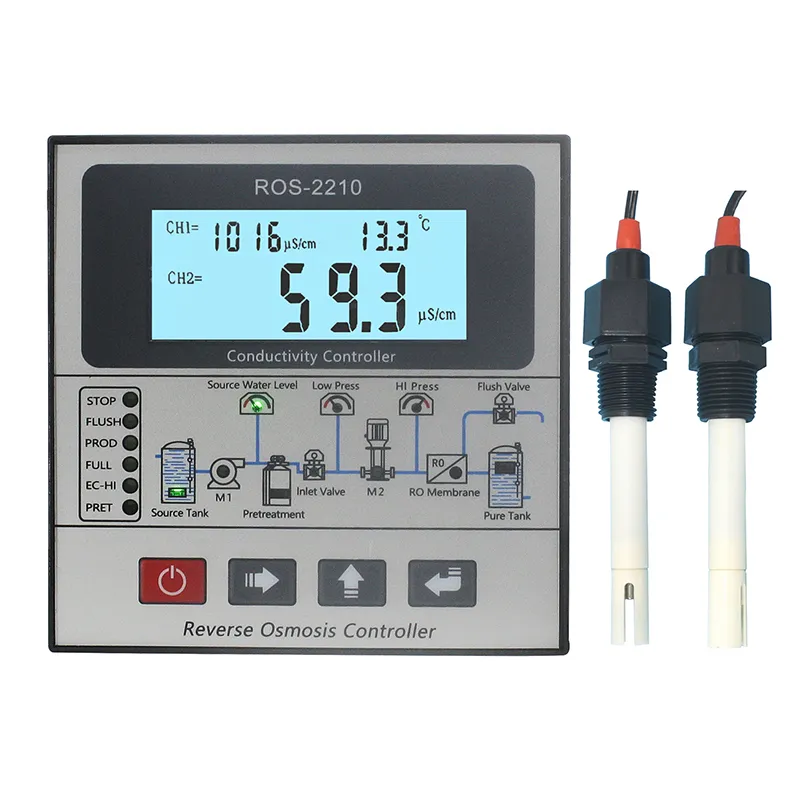
The controller's integrated design ensures seamless management of RO system parameters, from pre-treatment monitoring to post-treatment quality assurance, contributing significantly to reduced operational costs and extended membrane lifespan.
Industry Trends in High-Purity Water Systems
The landscape of industrial water treatment is evolving rapidly, driven by several key trends. Increasing global awareness of water scarcity, coupled with stricter environmental discharge regulations (e.g., EPA, EU Water Framework Directive), is pushing industries towards more efficient water reuse and reclamation technologies. This necessitates advanced monitoring and control systems capable of delivering consistent, high-quality treated water.
- Automation and Digitalization: The integration of IoT, AI, and machine learning into water treatment plants for predictive maintenance, remote monitoring, and optimized operational parameters.
- Energy Efficiency: A persistent focus on reducing the energy footprint of RO systems through advanced pump technologies, energy recovery devices, and intelligent control algorithms that minimize unnecessary flushing or downtime.
- Membrane Longevity: Innovations in membrane materials and sophisticated pre-treatment and cleaning-in-place (CIP) strategies to extend the operational life of expensive RO membranes, reducing replacement costs.
- Modularity and Scalability: The demand for modular, easily scalable systems that can be adapted to changing production needs or water quality requirements without significant re-engineering.
These trends highlight the critical role of precise, real-time control solutions like the ROS-2210 in enabling industries to meet both production quality targets and environmental compliance, while simultaneously improving cost-effectiveness.
Understanding the ROS-2210 Manufacturing Process and Key Advantages
The superior performance and reliability of the ROS-2210 stem from a meticulously engineered manufacturing process, emphasizing robust materials and rigorous quality control.
Process Flow Overview:
High-grade ABS/PC for housing, 316L stainless steel for wetted sensor parts, industrial-grade PCBs.
Injection molding for enclosures, CNC machining for critical sensor components, automated SMT for circuit boards.
Modular assembly of electronic and mechanical components, multi-point calibration of conductivity sensors.
Pressure integrity, electrical safety, functional performance, environmental resilience tests (e.g., IP rating).
Key Specifications & Standards:
- Product Materials: The main enclosure utilizes UV-stabilized ABS or PC, offering excellent resistance to environmental degradation and chemical exposure. Wetted parts in the associated conductivity sensors are typically 316L stainless steel or titanium, ensuring superior corrosion resistance even in aggressive industrial waters.
- Manufacturing Processes: Components are produced via precision injection molding for complex plastic parts and advanced CNC machining for metal components, guaranteeing tight tolerances and consistent quality. Circuit boards undergo automated surface-mount technology (SMT) assembly for high reliability.
- Testing Standards: Each unit undergoes comprehensive quality control, adhering to international standards such as ISO 9001 for quality management systems, ANSI/AWWA standards for water treatment equipment, and CE directives for electrical safety and electromagnetic compatibility (EMC).
- Service Life: Designed for continuous operation, the ROS-2210 typically exhibits a service life of 5-7 years under proper operating and maintenance conditions, demonstrating robust industrial-grade durability.
Target Industries & Advantages:
- Petrochemical: Critical for boiler feed water, cooling tower makeup, and process water, where high-purity water prevents scaling and corrosion, thereby extending equipment life. The ROS-2210's precision control contributes to significant energy saving by optimizing RO membrane flushing cycles.
- Metallurgy: Used in rinse water applications and closed-loop cooling systems. Its robust design ensures corrosion resistance in aggressive environments, reducing maintenance and downtime.
- Water Supply & Drainage: Essential for producing potable water or treating wastewater for discharge, ensuring regulatory compliance and efficient resource management. The controller’s reliable performance reduces chemical consumption by precisely managing RO operations.
- Power Generation: Crucial for ultrapure water production for boiler feed and turbine cooling. The controller's accuracy in conductivity control directly impacts turbine efficiency and prevents costly shutdowns due to water quality issues.
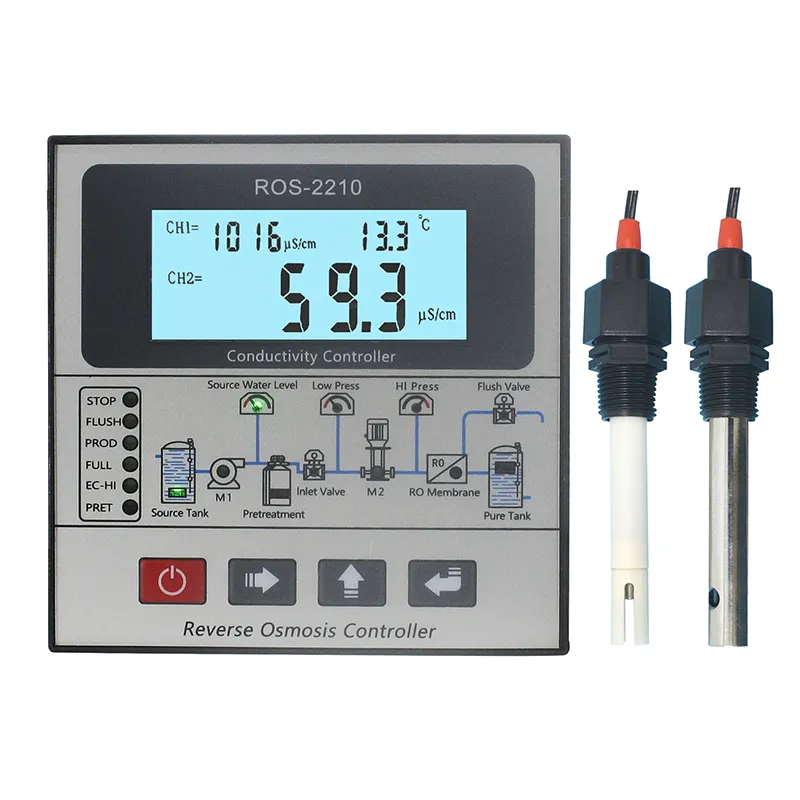
These advantages underscore the ROS-2210's capability to deliver measurable benefits in demanding industrial settings, blending operational reliability with cost efficiency.
Technical Specifications and Operational Parameters
The ROS-2210 is engineered with a suite of technical specifications designed for robust performance and precise control in challenging industrial environments. Its parameters ensure optimal operation of single-stage RO systems.
Product Specification Table:
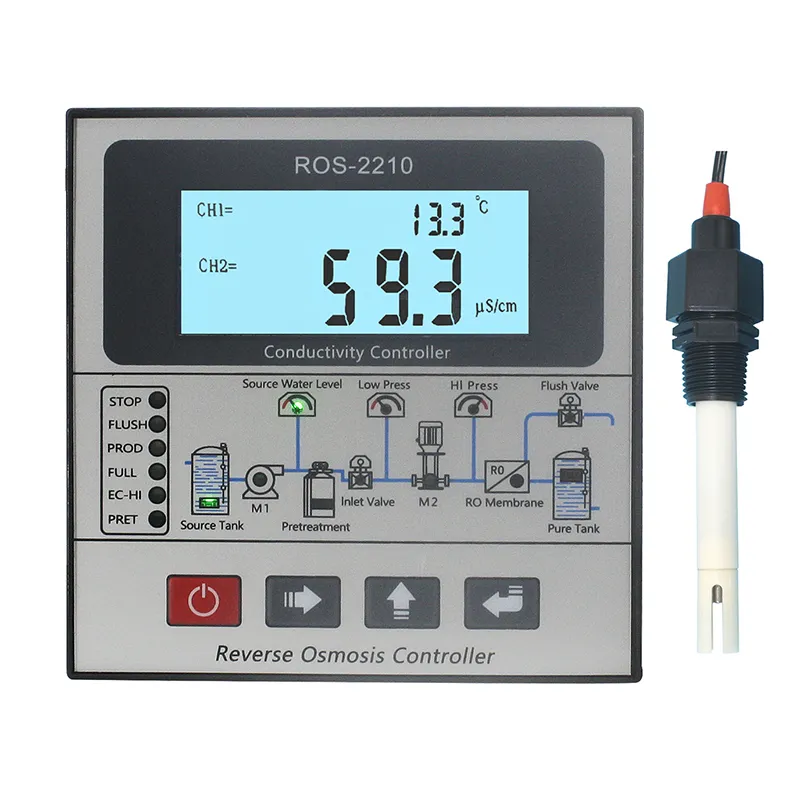
These specifications highlight the ROS-2210's suitability for demanding industrial applications, offering both the precision and robustness required for effective RO system management.
Versatile Application Scenarios
The adaptability of the ROS-2210 allows it to serve a multitude of critical functions across diverse industrial sectors requiring precise water quality control. Its robust design and accurate measurements make it indispensable for optimizing RO system performance.
- Boiler Feed Water Treatment: In power plants and industrial facilities, the ROS-2210 monitors and controls the purity of demineralized water supplied to boilers. High conductivity in boiler feed water can lead to scaling, corrosion, and reduced thermal efficiency. The controller ensures that the permeate conductivity remains within specified limits, preventing costly damage and extending boiler lifespan.
- Ultrapure Water Production: Pharmaceuticals, semiconductors, and laboratories require water with exceptionally low conductivity. The ROS-2210 acts as a gatekeeper, ensuring that water quality meets stringent standards (e.g., ASTM Type I/II, USP, EP) before it proceeds to further purification stages or point-of-use. It can trigger alarms or diversion valves if conductivity exceeds set thresholds.
- Cooling Tower Make-up Water: Controlling the dissolved solids in cooling tower make-up water is crucial for preventing scaling, biofilm formation, and corrosion. The ROS-2210 helps manage the RO process to provide high-quality make-up water, reducing blowdown requirements, minimizing chemical usage, and improving cooling efficiency.
- Wastewater Reclamation and Reuse: As industries increasingly seek to minimize their environmental footprint, RO is employed to treat wastewater for non-potable reuse or discharge. The ROS-2210 facilitates efficient contaminant removal, ensuring treated water meets specific reuse standards or discharge limits, contributing to sustainable water management.
- Food & Beverage Processing: Water quality directly impacts product consistency and safety in food and beverage production. From ingredient water to rinse water, the ROS-2210 helps maintain the required water purity, safeguarding product quality and preventing contamination.
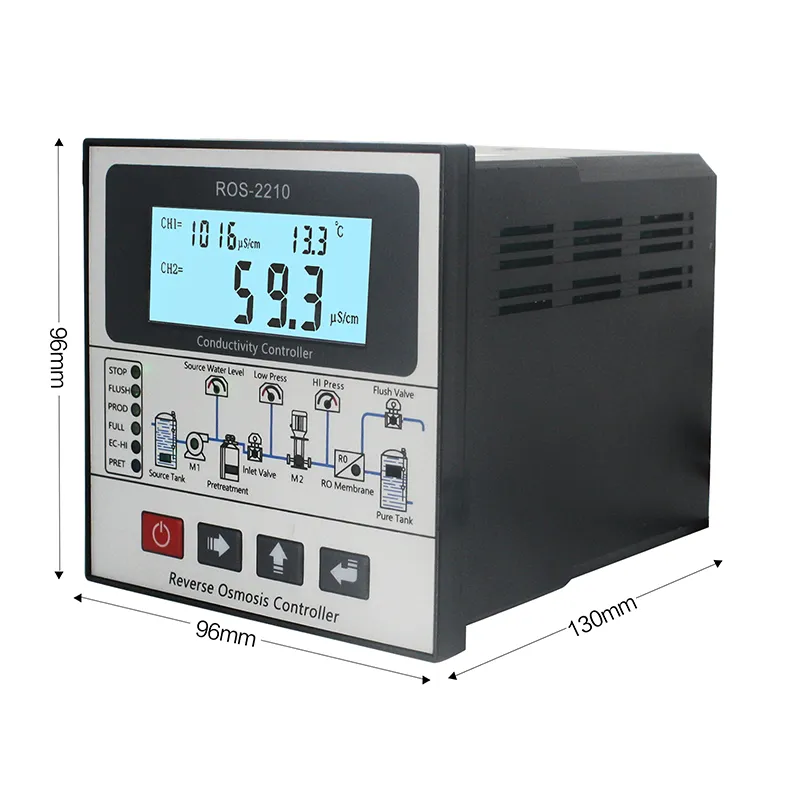
In each of these scenarios, the ROS-2210 acts as a reliable sentinel, providing critical feedback and control to ensure continuous, high-quality water production and process optimization.
Technical Advantages of the ROS-2210
The design and functionality of the ROS-2210 are predicated on delivering a suite of technical advantages that translate directly into enhanced operational efficiency, reduced maintenance, and superior water quality outcomes for B2B users.
- High Precision Conductivity Measurement: Utilizing advanced microprocessors and robust sensor technology, the ROS-2210 provides highly accurate and stable conductivity readings across its wide range. This precision is critical for effective RO control, preventing off-spec water production and minimizing membrane scaling or fouling.
- Advanced Control Algorithms: The controller incorporates intelligent algorithms for managing RO flush cycles, pump operations, and permeate diversion. This optimization leads to significant energy saving by running pumps only when necessary and extends membrane life by preventing concentration polarization and scaling.
- User-Friendly Interface: Despite its advanced capabilities, the ROS-2210 features an intuitive LCD interface with clear navigation, simplifying setup, calibration, and monitoring for plant operators. This reduces training time and potential for operational errors.
- Robust Construction for Industrial Environments: With an IP65 rated enclosure, the unit is protected against dust ingress and water jets, making it suitable for installation in harsh industrial settings where exposure to moisture and particulate matter is common. This contributes to exceptional long-term reliability.
- Seamless Integration Capabilities: The optional RS485 (Modbus RTU) communication port allows for effortless integration into existing Supervisory Control and Data Acquisition (SCADA) systems, Distributed Control Systems (DCS), or Programmable Logic Controllers (PLCs). This enables centralized monitoring, data logging, and remote control, enhancing overall plant automation and data analysis.
- Diagnostic and Alarm Functions: Built-in diagnostic features and customizable alarm set-points provide immediate alerts for critical system deviations (e.g., high permeate conductivity, sensor malfunction), allowing for proactive intervention and preventing prolonged off-spec conditions or system damage.
- Low Maintenance Requirements: Designed with durability in mind, the ROS-2210 requires minimal routine maintenance, typically limited to periodic sensor calibration and cleaning. This reduces operational overhead and maximizes uptime.
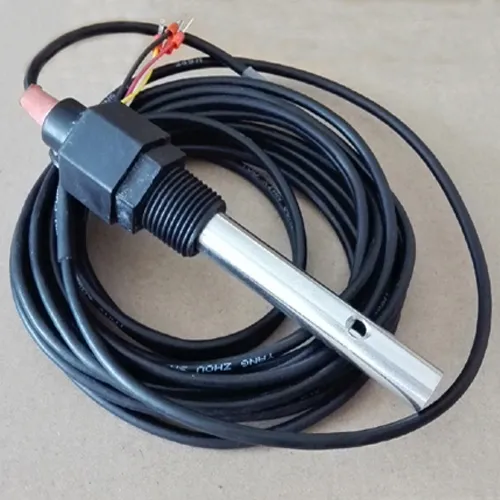
These technical advantages collectively position the ROS-2210 as a leading solution for industries seeking to achieve peak performance, reliability, and cost-effectiveness in their RO water treatment operations.
Vendor Comparison: ROS-2210 vs. Standard Controllers
Selecting the right RO controller is crucial for system performance and operational costs. While many generic controllers are available, the ROS-2210 distinguishes itself through a blend of advanced features, robust engineering, and comprehensive support. This comparison highlights key differentiating factors.
Product Comparison Table:
While generic controllers may offer a lower upfront cost, their limitations in accuracy, reliability, integration, and environmental robustness often lead to higher total cost of ownership through increased maintenance, system downtime, and inconsistent water quality. The ROS-2210 represents an investment in long-term operational excellence and compliance.
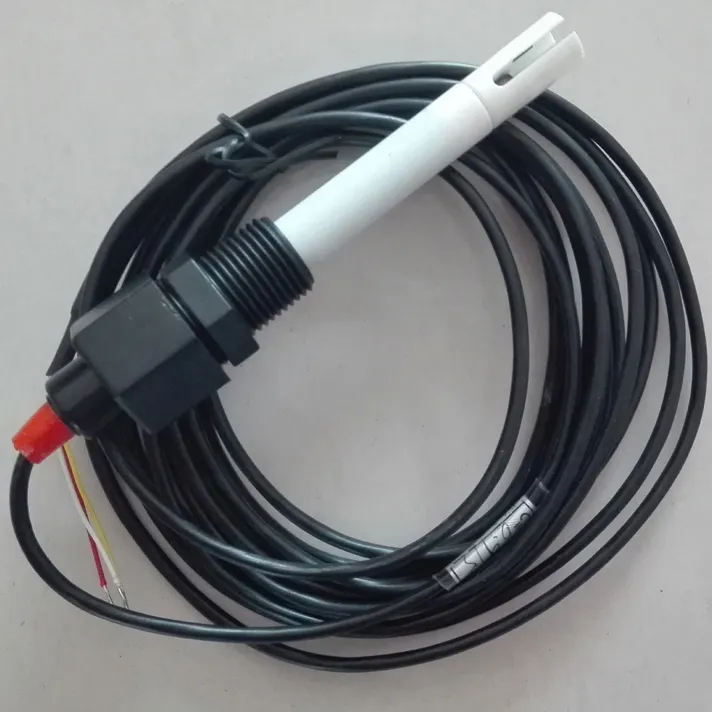
For critical industrial applications where water purity directly impacts product quality, process efficiency, and regulatory compliance, the superior performance and features of the ROS-2210 make it the discerning choice.
Customized Solutions and Integration Support
Recognizing that no two industrial processes are identical, the provision of tailored solutions is a cornerstone of our offering for the ROS-2210. We understand that specific operational requirements, existing infrastructure, and compliance mandates often necessitate a flexible approach beyond off-the-shelf products.
Tailored for Your Needs:
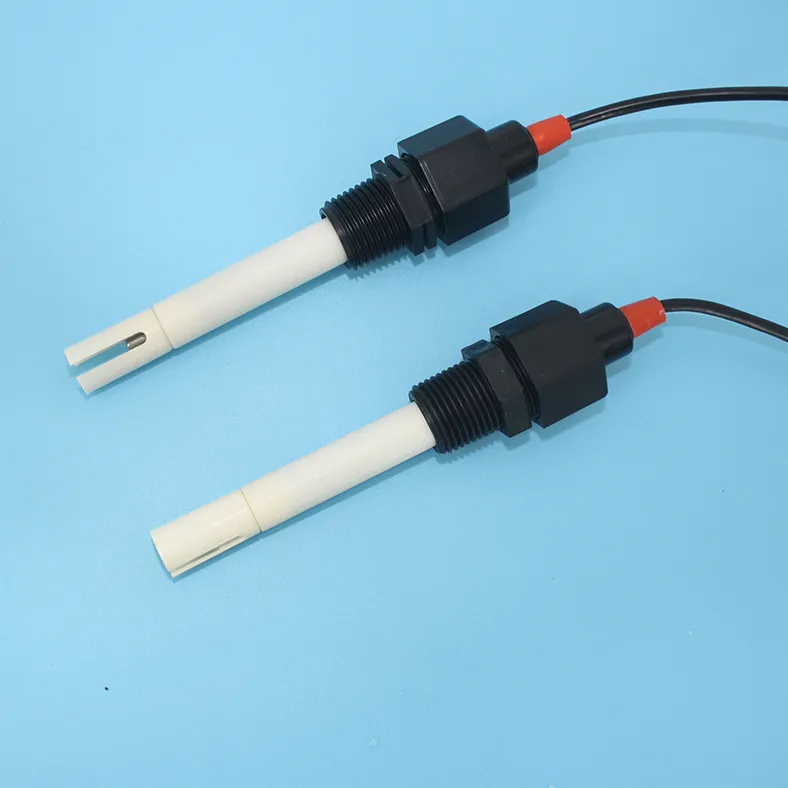
- Specialized Sensor Integration: While the ROS-2210 comes with standard conductivity sensors, we offer expertise in integrating specialized sensor types for unique conditions, such as high-temperature environments, corrosive chemicals, or very low conductivity measurements required for ultrapure water applications.
- Communication Protocol Adaptation: Beyond the standard RS485 Modbus RTU, our engineering team can assist in adapting the controller for integration with other communication protocols (e.g., Profibus, Ethernet IP) to seamlessly fit into diverse plant automation architectures, minimizing integration complexities and costs.
- Enclosure and Mounting Options: For environments with extreme conditions or space constraints, custom enclosure materials, mounting configurations (e.g., rack-mount, hazardous area rated), and even explosion-proof certifications can be explored to ensure the ROS-2210 functions optimally and safely.
- Specific Control Logic Programming: Our team can assist in programming customized control sequences or alarm logics specific to your RO system's operational philosophy. This could include complex flush cycles, chemical dosing interlocks, or multi-stage permeate diversion strategies to meet precise process demands.
- Software and Firmware Customization: For advanced users or highly specific applications, adaptations to the ROS-2210's firmware can be developed to unlock new functionalities, optimize existing ones, or comply with unique regulatory requirements.
Our commitment extends beyond providing a product; we offer comprehensive engineering support and consultation services to ensure that the ROS-2210 is perfectly aligned with your project goals, contributing to maximum efficiency and long-term reliability. Our experienced technical support team is available to assist with integration challenges, provide application guidance, and offer post-installation optimization, making us a trusted partner in your water treatment endeavors.
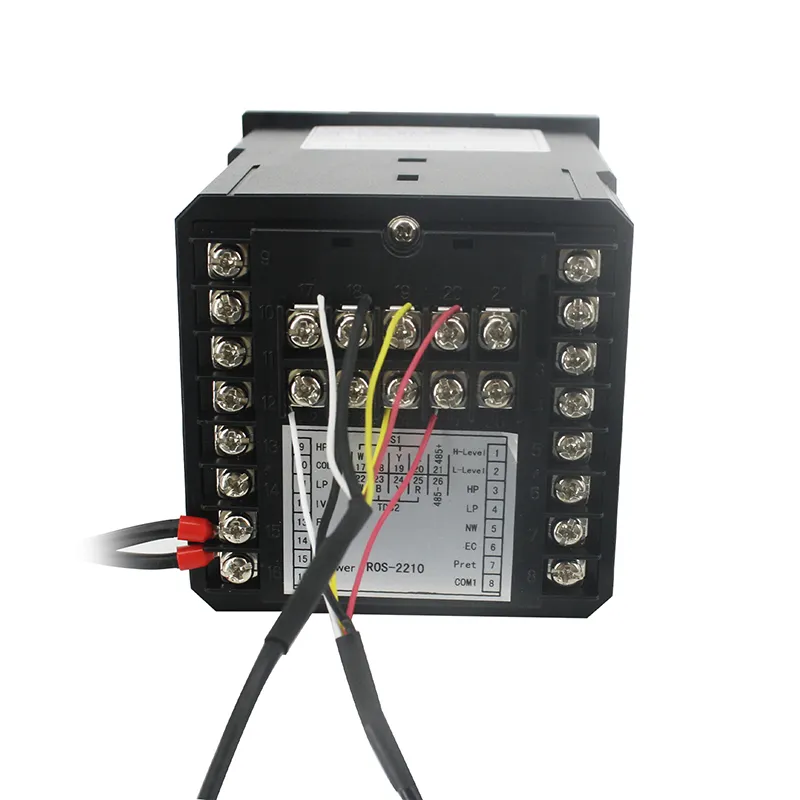
Partnering with us means gaining access to not just a superior RO controller, but a dedicated team ready to craft and implement a solution that truly fits your unique industrial water treatment demands.
Application Case Studies
The real-world performance of the ROS-2210 is best demonstrated through its successful deployment in diverse industrial environments. These case studies exemplify how its precision and reliability deliver tangible benefits and significant return on investment.
Case Study 1: Pharmaceutical Plant Achieves USP Compliance
A major pharmaceutical manufacturer faced challenges in consistently meeting United States Pharmacopeia (USP) standards for purified water due to fluctuations in their RO system's permeate quality. Their existing controller lacked the precision and responsiveness required for real-time adjustments.
- Challenge: Inconsistent water conductivity affecting product quality and compliance, leading to batch rejections.
- Solution: Implementation of the ROS-2210 to monitor permeate conductivity with enhanced accuracy and automatically trigger permeate diversion if quality dipped below a set threshold.
- Results: Achieved consistent USP-compliant water quality, reducing batch rejections by 18% and significantly lowering operational costs associated with reprocessing. The plant reported improved operator confidence due to the controller's reliability and clear diagnostics.
Case Study 2: Petrochemical Facility Reduces Water Waste by 20%
A petrochemical refinery utilizing an RO system for boiler feed water faced excessive water wastage due to conservative, time-based flushing cycles and premature membrane replacement. They sought a solution to optimize water recovery and extend membrane life.
- Challenge: Suboptimal RO system efficiency, leading to high water consumption and frequent membrane maintenance.
- Solution: The ROS-2210 was integrated to manage RO operations dynamically, initiating flush cycles based on real-time feed water conductivity and permeate recovery rates, rather than fixed schedules.
- Results: The facility reported a 20% reduction in wastewater discharge and an estimated 15% increase in RO membrane lifespan within the first year. The precise control also contributed to a 5% reduction in energy consumption related to pump operation.
These case studies highlight the ROS-2210's capacity to deliver measurable improvements in water quality, operational efficiency, and cost-effectiveness across diverse industrial applications, solidifying its reputation as a reliable and high-performing control solution.
Trustworthiness & Support
Frequently Asked Questions (FAQ)
Q: What types of RO systems is the ROS-2210 compatible with?
A: The ROS-2210 is primarily designed for single-stage RO systems, offering comprehensive control over permeate quality and system operation. Its flexible programming also allows for integration into more complex setups requiring dedicated conductivity monitoring.
Q: How often does the conductivity sensor need calibration?
A: The frequency of calibration depends on the application's water quality and operational demands. Typically, for industrial applications, calibration is recommended every 3-6 months. Our technical support can provide specific guidance based on your process.
Q: Can the ROS-2210 be integrated into existing control systems?
A: Yes, with its optional RS485 (Modbus RTU) communication interface, the ROS-2210 can be seamlessly integrated into existing SCADA, DCS, or PLC systems for centralized monitoring and control. Customization options for other protocols are also available.
Lead Time & Fulfillment
Standard ROS-2210 units typically have a lead time of 2-4 weeks from order confirmation, depending on current stock levels and order volume. For customized solutions or large-scale projects, specific lead times will be provided upon detailed project assessment. We maintain a robust supply chain to ensure timely delivery and efficient project execution.
Warranty Commitments
All ROS-2210 controllers come with a standard 12-month limited warranty covering manufacturing defects and material failures from the date of purchase. Extended warranty options and service agreements are available for enhanced peace of mind, offering comprehensive coverage and preferential service rates. Terms and conditions apply; please contact our sales team for detailed warranty information.
Customer Support & After-Sales Service
Our commitment to our clients extends beyond the sale. We provide comprehensive customer support, including:
- Technical Assistance: A dedicated team of engineers is available for troubleshooting, application support, and operational guidance via phone, email, or online portal.
- Spare Parts Availability: We ensure a readily available supply of genuine spare parts and accessories to minimize downtime and extend the service life of your ROS-2210.
- Field Service & Training: On-site installation support, calibration services, and tailored training programs for your operational and maintenance staff can be arranged to ensure optimal system performance and knowledge transfer.
Conclusion
The ROS-2210 stands as a testament to advanced engineering in industrial water treatment, offering unparalleled precision, reliability, and adaptability for single-stage reverse osmosis and conductivity control. Its robust design, comprehensive feature set, and integration capabilities position it as an essential component for industries striving for optimal water quality, operational efficiency, and environmental compliance.
By embracing the ROS-2210, businesses can confidently navigate the complexities of modern water treatment, ensuring consistent performance, reducing operational expenditures, and securing a sustainable future. We are committed to supporting our clients with not just a product, but a complete solution backed by expert technical assistance and dedicated after-sales service.
References
- Metcalf & Eddy. (2014). Wastewater Engineering: Treatment and Resource Recovery. McGraw-Hill Education.
- American Water Works Association. (2011). Water Quality & Treatment: A Handbook on Drinking Water. McGraw-Hill Professional.
- ISO 9001:2015. (2015). Quality management systems — Requirements. International Organization for Standardization.
- United States Pharmacopeia. (2020). USP 43–NF 38: Water for Pharmaceutical Purposes. U.S. Pharmacopeial Convention.
- Wang, L. K., et al. (Eds.). (2010). Membrane and Desalination Technologies (Handbook of Environmental Engineering Vol. 10). Humana Press.

Related Products




Related News


2026-11-03 04:36:32
Rotameter FAQ for small-flow measurement in water treatmentLearn how a Rotameter measures fluid flow, where it fits in water-treatment and RO systems, and which accuracy, pressure, and float details to review before ordering.

2026-10-29 03:32:11
Choosing WS 9100: Application Fit and Specification ChecksEvaluate whether the WS 9100 fits your environmental monitoring project. Review power supply options, temperature-controlled storage, sampling method compatibility, and key specifications before purchasing.

2026-10-23 04:19:53
PH/ORP-6850 Controller FAQ: Specifications, Configuration Options and Ordering QuestionsPH/ORP-6850 FAQ: pH 0–14 and ORP ±1200 mV ranges, ±0.02 pH accuracy, isolated 4–20 mA output, relay alarms, power supply options and panel installation.

2026-07-01 09:39:59
Guide to Ensuring Water Purity for drinking water tds MonitoringEnsuring Water Purity: The Ultimate Guide for Drinking Water TDS Monitoring Maintaining high water quality standards is essential for public health and industrial safety. One of the most critical metrics for assessing water purity is Total Dissolved Solids TDS, which represents the combined content of all inorganic and organic substances dissolved in water. Utilizing high-precision equipment for drinking water tds measurement allows facilities to detect contamination and ensure that filtration systems are operating at peak efficiency. In this guide, we will explore the technical aspects of TDS monitoring and how advanced transmitters provide the reliability needed for modern environmental monitoring.

2026-06-29 16:58:21
Understanding the Conversion of Electrical Conductivity to TDSUnderstanding the Conversion of Electrical Conductivity to TDS In water quality analysis, measuring the purity of a liquid often involves understanding the relationship between electrical conductivity to tds Total Dissolved Solids. While conductivity measures the ability of water to pass an electrical currentwhich is directly influenced by the concentration of ionized substancesTDS represents the total amount of mobile charged ions, including minerals, salts, or metals dissolved in a given volume of water. For professionals in environmental monitoring and water treatment, mastering this conversion is essential for maintaining system efficiency and ensuring regulatory compliance.

2026-06-27 17:38:40
Industrial Guide to Electrical Conductivity Salt Water MonitoringUnderstanding Electrical Conductivity Salt Water Monitoring for Industrial Precision In the realm of water quality analysis, measuring the electrical conductivity salt water levels is a critical process for maintaining industrial efficiency and environmental safety. Conductivity serves as a direct indicator of the concentration of dissolved ions, which is essential for industries ranging from desalination plants to chemical manufacturing. Accurate monitoring prevents equipment corrosion, ensures product purity, and supports regulatory compliance. By utilizing advanced instrumentation, operators can achieve real-time insights into salt concentrations, allowing for immediate adjustments in water treatment processes to avoid costly downtime.

2026-06-26 16:42:22
Technical Guide to Industrial ec meter circuit Design and UseUnderstanding the EC Meter Circuit: The Heart of Water Quality Analysis Electrical Conductivity EC is a fundamental parameter in environmental monitoring, aquaculture, and industrial water treatment. At the core of every reliable measurement device is a sophisticated ec meter circuit , which converts the physical conductance of a liquid into a precise digital reading. Whether you are managing a boilers deoxygenation process or monitoring nutrient levels in hydroponics, understanding how the circuit handles signal amplification and temperature compensation is key to ensuring data accuracy. This guide explores the technical intricacies of EC circuitry and how it integrates into professional water quality controllers.

2026-06-25 18:39:20
Professional Guide to drinking water testing for tds and PurityDrinking Water Testing for TDS: Ensuring Pure and Safe Water Quality Maintaining high water quality is essential for both health and industrial efficiency. When performing drinking water testing for tds , professionals seek to measure the Total Dissolved Solids TDS, which indicates the concentration of dissolved inorganic salts and organic matter in water. Whether you are managing a municipal water plant or a high-precision industrial facility, understanding the conductivity and TDS levels is the first step toward effective water treatment. In this guide, we explore the technical aspects of TDS measurement and the advanced instrumentation required for accurate monitoring.

 English