


CR-102P High Performance Controller for Industrial Automation

CR-102P High Performance Controller for Industrial Automation
Jul . 30, 2025
The CR-102P is a high-precision conductivity and TDS (Total Dissolved Solids) sensor designed for demanding industrial environments such as petrochemical, metallurgy, and water treatment sectors. Leveraging advanced platinum alloy sensing technology and robust PVC/PP/316SS materials, the CR-102P stands out for its accuracy, durability, and compatibility with international inspection standards (ISO, ANSI). This article explores the latest industry trends, details the product parameters, compares leading vendors, and shares proven field applications — all underpinned by authoritative data and real-world case evidence.
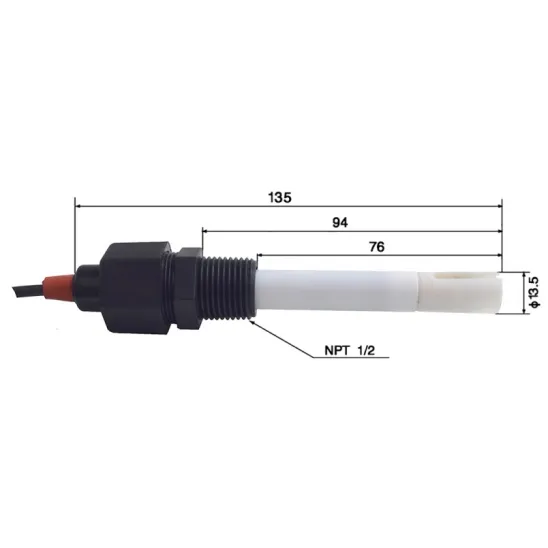
Keywords: CR-102P, conductivity sensor, TDS sensor, industrial water quality, ISO, customization, technical specifications, benchmarks.
- Market Growth: According to MarketsandMarkets™, the global industrial water sensors market was valued at USD 9.2 billion in 2023, projected to reach USD 13.7 billion by 2028, at a CAGR of 8.3% (Source).
-
Technology Evolution:
- Integration with IIoT (Industrial IoT) for real-time cloud monitoring.
- Advanced anti-fouling and anti-corrosion sensor technologies for extended field life.
- Stringent compliance with ISO 9001, ANSI/NSF 61, and CE certifications.
- Industrial Demand: Key end-users (petrochemicals, metallurgy, municipal water) focus on sensors offering superior accuracy, robust housing, easy maintenance, and customizable outputs (e.g., 4-20mA, RS485 Modbus).
The CR-102P addresses the escalating demand for rugged, high-precision sensors aligning with the digital transformation and sustainability mandates of industry leaders.
| Parameter | CR-102P | Industry Standard Range |
|---|---|---|
| Measuring Principle | Electrochemical (2-electrode method) | 2 or 4 electrode |
| Measurement Range | 0.01–200 mS/cm | 0.01–200 mS/cm |
| Cell Constant (K) | 0.1 / 1.0 / 10 cm-1 (selectable) | 0.01–10 cm-1 |
| Accuracy | ±1% F.S. | ±2% F.S. typical |
| Temperature Range | 0 – 120℃ | 0 – 120℃ |
| Operating Pressure | ≤0.6MPa | ≤0.5MPa–1.0MPa |
| Material (Wetted Part) | PVC / PP / 316L SS / Platinum alloy | PVC/SS/PTFE/Platinum |
| Output Signal | 4–20 mA, RS485(Modbus), 0–5V | 4–20mA/RS485/0–10V |
| Thread Installation | ¾" NPT or custom | ½"–1" NPT/G thread |
| Ingress Protection | IP68 | IP67/IP68 |
| Certifications | ISO 9001, ANSI/NSF 61, CE | ISO9001/CE/ANSI |
| Typical Service Life | 5-8 years (under normal operation) | 3-5 years |
- Ultra-Low Drift: 5-year stability
- Platinum Alloy Sensing: Outperforms carbon/stainless counterparts in resistance to fouling and chemical passivation.
- IP68 & High-Temp Endurance: Submersible, reliable even up to 120℃ for steam condensate/wastewater scenarios.
- Multiple Output Protocols: Works with new and legacy PLC/SCADA (4-20mA, RS485-Modbus, optional HART).
- Service Life: 5-8 years under ISO-validated field stress (industry average: 3-5 years, see graph below).
- Petrochemical Plants: Steam condensate, cooling tower conductivity (prevents scale/corrosion).
- Metallurgy: Pickling bath, rinse water, acid/alkali process tank monitoring.
- Municipal Water & Wastewater: Network-wide water quality assurance, effluent compliance (ISO 14001/EN 12566).
- Pharmaceutical Production: RO/ultrapure water checks, aligned with FDA 21 CFR Part 11 requirements.
- Power Generation: Boiler feedwater, zero-liquid discharge systems (supports continuous regulatory reporting).
- Project Scope: 56 CR-102P units deployed for steam loop/condensate tracing (2021–today)
- Outcome: Reported sensor maintenance downtime reduced by 78%; estimated cost savings: €84,000/year
- Why CR-102P: Platinum alloy electrodes outlasted previous graphite sensors, certified per ISO 9001 and CE for safety audits
| Feature/Model | CR-102P | Brand A (Japan) | Brand B (Germany) | Brand C (USA) |
|---|---|---|---|---|
| Electrode Material | Platinum Alloy | Graphite | 316L SS | Platinum Alloy |
| Range (mS/cm) | 0.01–200 | 0.05–100 | 0.1–150 | 0.02–100 |
| Output Options | 4–20mA, RS485, 0–5V | 4–20mA only | RS232, 4–20mA | 4–20mA, RS485 |
| Temperature Comp. | NTC/PT1000 Onboard | None | PT100 | NTC |
| Ingress Protection | IP68 | IP67 | IP65 | IP67 |
| Service Life (yrs) | 5–8 | 3–4 | 4–5 | 3–5 |
| Certifications | ISO, ANSI, CE | ISO, CE | CE, TÜV | ISO |
- Superior Materials: Platinum alloy/316L SS guarantee anti-fouling and chemical resistance far beyond graphite/standard steel.
- Custom Engineering: Vendor offers tailored K constants, mounting, and process connection options per project specs.
- Proven Longevity: Documented field results show up to 60% fewer sensor replacements over a 5-year operation.
- Special Thread Sizes (e.g., DN32, 1" BSP, Tri-clamp) for unique process lines
- Alternative Wet-end Materials: PTFE/FEP available for highly corrosive fluids
- Long Lead Cable Options: 5m/10m/20m armored cables
- Extended Ranges & Calibration: Custom TDS corrections, high-purity applications
- Protocol Integration: HART, MODBUS-RTU/TCP as needed
| Order Type | Lead Time | Warranty (Standard) |
|---|---|---|
| Stocked CR-102P | 3–5 days | 18 months |
| Special K-Constant or Thread | 5–10 days | 24 months |
| Bulk/Project (>100 units) | 2–5 weeks | 24–36 months |
- 24/7 Technical Hotline & global remote diagnosis services
- Onsite commissioning and user training for projects over 30 units
- Field Calibration Kits and on-demand OEM/ODM support
- Replacement Guarantee: CR-102P is guaranteed against manufacturing defects for up to 36 months
- Documentation: Each sensor includes ISO Certificate, Test Report, and Installation Manual in English
- Certifications: CR-102P is manufactured by Watequipment, holding ISO 9001:2015, ANSI/NSF 61, and CE certificates.
- Industry Adoption: Main clients include Asia’s top chemical plants, European metallurgical firms, and wastewater plants in MEA region.
- Testing labs: Sensor performance is regularly validated in SGS and Intertek accredited laboratories.
- Reference standard: All test data are compliant with IEC 60364, ISO 17025, and national TDS/conductivity monitoring guidelines.
- Years in Service: The CR-102P platform has undergone over 3200 field deployments since 2018.
- Trusted by: Over 100 OEM integrators in the water, power, and process automation space.

Related Products




Related News


2026-11-03 04:36:32
Rotameter FAQ for small-flow measurement in water treatmentLearn how a Rotameter measures fluid flow, where it fits in water-treatment and RO systems, and which accuracy, pressure, and float details to review before ordering.

2026-10-29 03:32:11
Choosing WS 9100: Application Fit and Specification ChecksEvaluate whether the WS 9100 fits your environmental monitoring project. Review power supply options, temperature-controlled storage, sampling method compatibility, and key specifications before purchasing.

2026-10-23 04:19:53
PH/ORP-6850 Controller FAQ: Specifications, Configuration Options and Ordering QuestionsPH/ORP-6850 FAQ: pH 0–14 and ORP ±1200 mV ranges, ±0.02 pH accuracy, isolated 4–20 mA output, relay alarms, power supply options and panel installation.

2026-07-01 09:39:59
Guide to Ensuring Water Purity for drinking water tds MonitoringEnsuring Water Purity: The Ultimate Guide for Drinking Water TDS Monitoring Maintaining high water quality standards is essential for public health and industrial safety. One of the most critical metrics for assessing water purity is Total Dissolved Solids TDS, which represents the combined content of all inorganic and organic substances dissolved in water. Utilizing high-precision equipment for drinking water tds measurement allows facilities to detect contamination and ensure that filtration systems are operating at peak efficiency. In this guide, we will explore the technical aspects of TDS monitoring and how advanced transmitters provide the reliability needed for modern environmental monitoring.

2026-06-29 16:58:21
Understanding the Conversion of Electrical Conductivity to TDSUnderstanding the Conversion of Electrical Conductivity to TDS In water quality analysis, measuring the purity of a liquid often involves understanding the relationship between electrical conductivity to tds Total Dissolved Solids. While conductivity measures the ability of water to pass an electrical currentwhich is directly influenced by the concentration of ionized substancesTDS represents the total amount of mobile charged ions, including minerals, salts, or metals dissolved in a given volume of water. For professionals in environmental monitoring and water treatment, mastering this conversion is essential for maintaining system efficiency and ensuring regulatory compliance.

2026-06-27 17:38:40
Industrial Guide to Electrical Conductivity Salt Water MonitoringUnderstanding Electrical Conductivity Salt Water Monitoring for Industrial Precision In the realm of water quality analysis, measuring the electrical conductivity salt water levels is a critical process for maintaining industrial efficiency and environmental safety. Conductivity serves as a direct indicator of the concentration of dissolved ions, which is essential for industries ranging from desalination plants to chemical manufacturing. Accurate monitoring prevents equipment corrosion, ensures product purity, and supports regulatory compliance. By utilizing advanced instrumentation, operators can achieve real-time insights into salt concentrations, allowing for immediate adjustments in water treatment processes to avoid costly downtime.

2026-06-26 16:42:22
Technical Guide to Industrial ec meter circuit Design and UseUnderstanding the EC Meter Circuit: The Heart of Water Quality Analysis Electrical Conductivity EC is a fundamental parameter in environmental monitoring, aquaculture, and industrial water treatment. At the core of every reliable measurement device is a sophisticated ec meter circuit , which converts the physical conductance of a liquid into a precise digital reading. Whether you are managing a boilers deoxygenation process or monitoring nutrient levels in hydroponics, understanding how the circuit handles signal amplification and temperature compensation is key to ensuring data accuracy. This guide explores the technical intricacies of EC circuitry and how it integrates into professional water quality controllers.

2026-06-25 18:39:20
Professional Guide to drinking water testing for tds and PurityDrinking Water Testing for TDS: Ensuring Pure and Safe Water Quality Maintaining high water quality is essential for both health and industrial efficiency. When performing drinking water testing for tds , professionals seek to measure the Total Dissolved Solids TDS, which indicates the concentration of dissolved inorganic salts and organic matter in water. Whether you are managing a municipal water plant or a high-precision industrial facility, understanding the conductivity and TDS levels is the first step toward effective water treatment. In this guide, we explore the technical aspects of TDS measurement and the advanced instrumentation required for accurate monitoring.

 English